
1. Introduction
Often discarded as agricultural waste, pomegranate peels are now recognized as a significant source of potent bioactive compounds. Among these, ellagic acid stands out as one of the most valuable and well-researched phytochemicals, with promising applications spanning nutrition, medicine, and cosmetics. Global research into pomegranate byproducts has intensified, revealing that the peel contains higher concentrations of certain antioxidants than the edible arils themselves. This article explores the extraction methods, biological benefits, and diverse applications of ellagic acid derived from pomegranate peel, highlighting its transition from waste material to valuable resource in sustainable health and wellness solutions.
2. Chemical Characteristics
Ellagic acid (C₁₄H₆O₈) is a natural phenolic antioxidant belonging to the class of compounds known as ellagitannins. In pomegranate peel, it exists both in free form and as part of larger molecules like punicalagin, which hydrolyzes to release ellagic acid. Its chemical structure features four hydroxyl groups and two lactone groups, contributing to its strong antioxidant capacity and relatively poor water solubility—a characteristic that presents both challenges and opportunities for formulation scientists.
3. Health Benefits and Mechanisms of Action
3.1 Potent Antioxidant Activity
Ellagic acid demonstrates exceptional free radical scavenging ability through multiple mechanisms:
· Direct neutralization of reactive oxygen species (ROS) and nitrogen species (RNS)
· Chelation of pro-oxidant metal ions like iron and copper
· Upregulation of endogenous antioxidant enzymes including superoxide dismutase and catalase
· Protection against lipid peroxidation, protein oxidation, and DNA damage
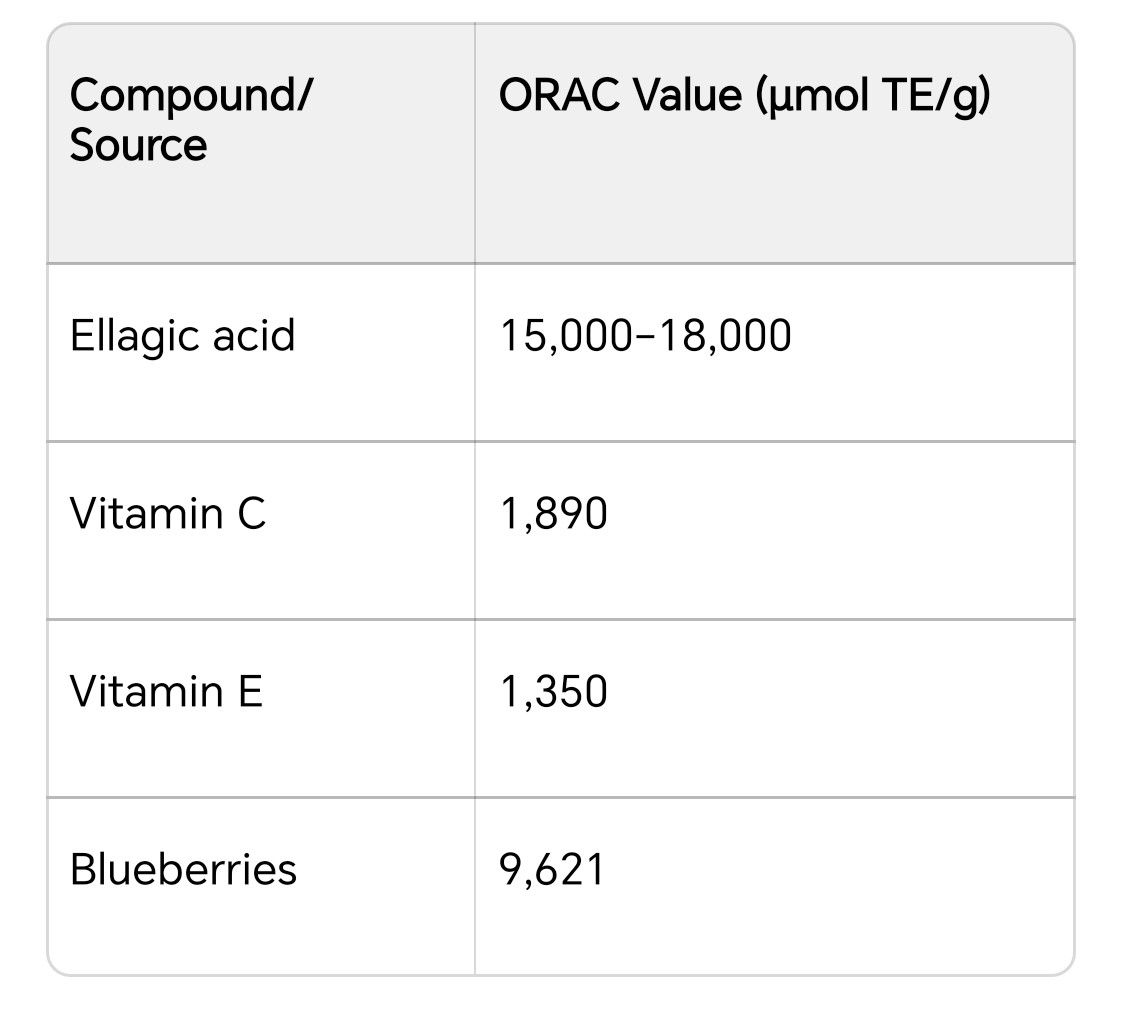
Table: Comparative Antioxidant Capacity (ORAC values)
3.2 Anti-Inflammatory Effects
Research indicates ellagic acid modulates inflammatory pathways through:
· Inhibition of nuclear factor kappa B (NF-κB) activation
· Downregulation of cyclooxygenase-2 (COX-2) and inducible nitric oxide synthase (iNOS)
· Reduction of pro-inflammatory cytokines (TNF-α, IL-6, IL-1β)
· Clinical relevance: Shows promise in animal models of arthritis, colitis, and dermatitis
3.3 Anticancer and Chemopreventive Properties
Perhaps the most studied aspect, ellagic acid exhibits multimodal anticancer activity:
· Induction of apoptosis in cancer cells through both intrinsic and extrinsic pathways
· Inhibition of angiogenesis, limiting tumor blood supply
· Detoxification of carcinogens through phase II enzyme induction
· Specific activity: Particularly studied against breast, colon, prostate, and skin cancers
· Important distinction: While promising in preclinical studies, human clinical evidence remains limited
3.4 Antimicrobial and Antiviral Activity
Ellagic acid demonstrates broad-spectrum antimicrobial properties:
· Effective against foodborne pathogens including Listeria monocytogenes, Escherichia coli, and Salmonella species
· Disruption of microbial cell membranes and inhibition of enzyme activity
· Antiviral potential against herpes simplex virus and human papillomavirus
· Practical application: Natural food preservative and topical antimicrobial agent
3.5 Metabolic Health Benefits
Emerging research suggests benefits for metabolic disorders:
· Improvement of insulin sensitivity and glucose metabolism
· Reduction of dyslipidemia (improved lipid profiles)
· Potential protective effects against non-alcoholic fatty liver disease (NAFLD)
· Mechanism: Modulation of PPAR-γ and AMPK signaling pathways
4. Applications in Various Industries
4.1 Food Industry and Functional Foods
· Natural preservative: Extends shelf life of meat, dairy, and baked goods by inhibiting oxidation and microbial growth
· Functional ingredient: Incorporated into beverages, yogurts, and snacks for added health value
· Clean-label solution: Meets consumer demand for natural alternatives to synthetic preservatives like BHA and BHT
4.2 Cosmetic and Skincare Formulations
Ellagic acid has become a sought-after cosmetic ingredient for:
· Skin brightening: Inhibition of tyrosinase, reducing melanin production and hyperpigmentation
· Anti-aging protection: Defense against UV-induced photoaging and collagen degradation
· Acne management: Anti-inflammatory and antimicrobial effects on Propionibacterium acnes
· Product forms: Serums, creams, sunscreens, and brightening treatments
4.3 Pharmaceutical and Nutraceutical Development
· Dietary supplements: Often combined with other antioxidants in capsule or tablet form
· Topical formulations: Wound healing creams and anti-inflammatory ointments
· Drug delivery research: Nanoparticle formulations to enhance bioavailability
· Preventive health: Potential role in cancer prevention strategies
4.4 Agricultural Applications
· Natural pesticide: Plant protection against fungal and bacterial diseases
· Animal feed additive: Improving livestock health and product quality
· Post-harvest treatment: Fruit and vegetable coatings to reduce spoilage
5. Current Research and Future Perspectives
5.1 Bioavailability Challenges and Solutions
A primary research focus addresses ellagic acid's limited bioavailability:
· Novel delivery systems: Liposomes, nanoparticles, and phospholipid complexes show promise in preclinical studies
· Prodrug approaches: Chemical modifications to improve solubility and absorption
· Synergistic formulations: Combination with piperine or quercetin to enhance bioavailability
· Microbial metabolites: Growing interest in urolithins, the bioavailable metabolites produced by gut microbiota
5.2 Clinical Translation and Safety
While extensive preclinical data exists, human clinical trials remain limited but growing:
· Generally recognized as safe (GRAS) status at appropriate doses
· Most studies report minimal side effects at recommended doses
· Ongoing trials investigating effects on metabolic syndrome, skin health, and cancer prevention
· Dosage considerations: Typical supplemental doses range from 50-500 mg daily, though optimal dosing requires further research
5.3 Sustainable Production and Economic Potential
· Waste valorization: Transforms pomegranate processing byproducts into high-value products
· Economic incentive: Adds value to pomegranate cultivation and processing industries
· Environmental benefit: Reduces agricultural waste and promotes circular economy principles
6. Conclusion
Ellagic acid from pomegranate peel represents a compelling example of nature's pharmacy, offering a wide spectrum of biological activities with applications across multiple industries. Its potent antioxidant, anti-inflammatory, and potentially chemopreventive properties, combined with its natural origin and generally favorable safety profile, make it an attractive ingredient for health-promoting products.
The future of pomegranate peel ellagic acid liesin addressing current limitations—particularly bioavailability challenges—while expanding clinical validation of its health benefits. As extraction technologies improve and our understanding of its mechanisms deepens, this once-discarded compound is poised to play an increasingly significant role in preventive health, sustainable agriculture, and innovative product development, truly embodying the principle that one person's waste can become another's treasure.